Carpenter ant damage in St. Louis City homes frequently concentrates in historic framing compromised by seasonal humidity and aged roofing systems. In neighborhoods like Lafayette Square, Soulard, and Benton Park,…
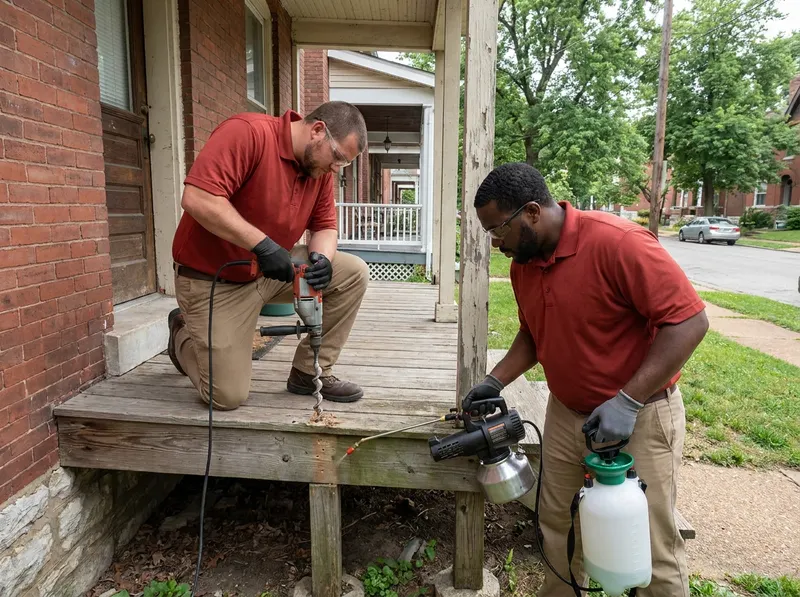
Carpenter ant damage in St. Louis City homes frequently concentrates in historic framing compromised by seasonal humidity and aged roofing systems. In neighborhoods like Lafayette Square, Soulard, and Benton Park, multi-story brick rowhouses often contain damp structural floor joists beneath old parapet walls and bathroom wet walls where carpenter ants excavate smooth nesting galleries. Unlike termites, carpenter ants do not consume wood cellulose; they hollow out sound structural timbers to shelter growing colonies, ejecting fine wood shavings known as frass through kick-out holes near baseboards and window casings.
Targeted structural remediation becomes necessary when standard surface insect sprays fail to reach deep interior satellite nests. In leafy residential areas near Tower Grove Park, the Missouri Botanical Garden, and Forest Park—including Shaw and Skinker DeBaliviere—mature canopy trees often serve as parent colony hubs, with worker trails bridging via utility lines directly into structural roof trusses. Applying generic retail repellents scatters these satellite nests deeper into wall cavities, worsening structural degradation. Rapid response teams utilize non-disruptive void micro-injections and perimeter transfer agents, allowing foraging workers to carry the treatment directly back to queens sequestered within structural headers and sill plates.
Every job gets a firm, written price after a free on-site visit.
Tell us about your carpenter ant structural remediation job in Saint Louis and we'll send a clear, written quote — usually the same day.
 Fast Home Pest Removal