Pest Control Service in Saint Louis provides rapid emergency intervention, biological eradication, and physical entry-point exclusion for residential and commercial properties facing acute infestation pressures. Finding a reliable pest control service near me means securing technicians who understand how local building architecture, historic masonry, and seasonal humidity shifts impact pest colonization across St.
No forms — call now for a fast, no-pressure quote.
📞 Call (314) 723-5388
Pest Control Service in Saint Louis is a specialized environmental remediation and structural protection process that eliminates insect, arachnid, and rodent infestations while sealing foundation voids against biological re-entry.
Every service reflects the same meticulous attention to detail — whether it's a single job or a larger pest control service project across Saint Louis.
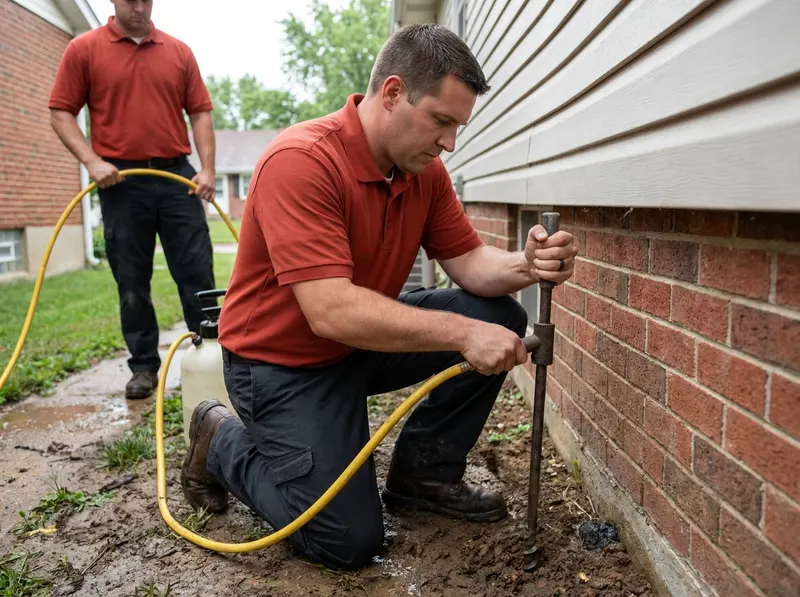
Our subterranean termite remediation program neutralizes active Reticulitermes flavipes colonies attacking foundation sills, floor joists, and structural stud walls. Technicians excavate continuous 6-inch by 6-inch trenches directly adjacent to exterior foundation footings and inject non-repellent liquid termiticides at a controlled pressure rate of 4 gallons per 10 linear feet. Where concrete driveways, masonry porches, or interior slab basements abut structural framing, technicians drill 1/2-inch access holes spaced precisely 12 inches apart to inject termiticide directly into subterranean soil strata. Eastern subterranean termites pass through the non-detectable active ingredient without avoidance, transferring the compound back to the subterranean royal pair via grooming and food exchange, which halts cellular energy transfer and collapses the entire colony within 60 to 90 days.
View details →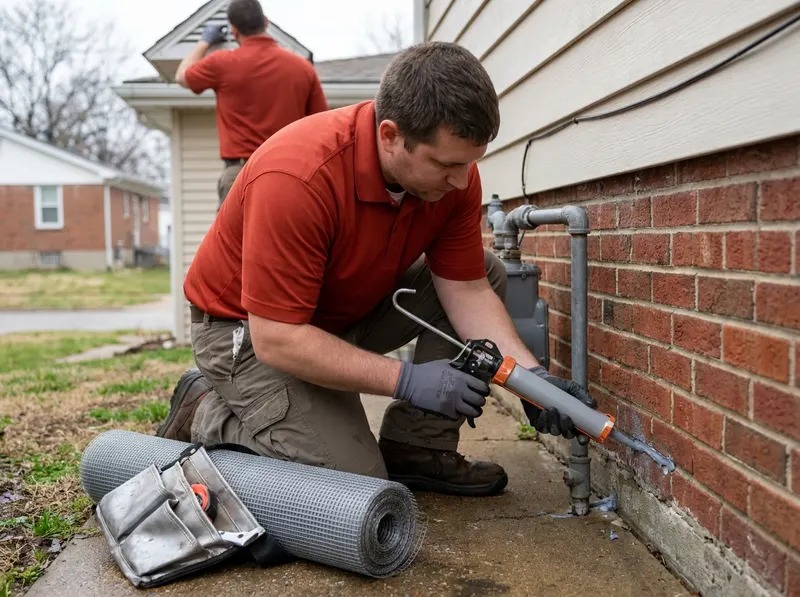
Our residential rodent exclusion service removes active Norway rat and house mouse populations while establishing a permanent mechanical barrier against future ingress. The initial phase deploys commercial snap traps and multi-catch mechanical stations placed along detected runway paths, droppings clusters, and perimeter baseboards to quickly extract the resident population without indoor rodenticide hazards. Concurrently, exclusion technicians inspect exterior foundations, rooflines, weep holes, crawlspace vents, and plumbing penetrations, sealing all gaps larger than 1/4 inch using 19-gauge galvanized steel hardware cloth, copper wire mesh, and heavy-duty polyether expanding compounds that rodents cannot gnaw through. Once trapping monitors show zero active captures, attic and basement crawlspaces are sanitized to remove rodent droppings, urine trails, pheromone markers, and biological nesting materials.
View details →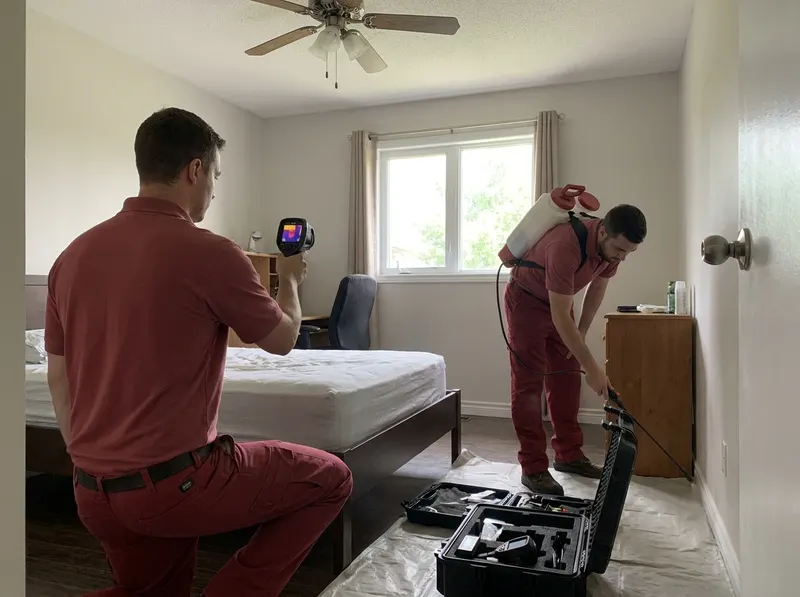
Our comprehensive bed bug elimination protocol eradicates all developmental stages of Cimex lectularius, including microscopic eggs, growing nymphs, and reproductive adults. The protocol utilizes specialized industrial electric convective heaters to raise interior room temperatures to a lethal thermal envelope between 122°F and 135°F, sustaining this heat threshold for a minimum of 4 hours while high-velocity air movers force heated air into deep mattress seams, baseboard channels, carpet tack strips, and electrical outlet boxes. Following thermal saturation, technicians apply microencapsulated residual pyrethroids paired with juvenile hormone mimics to interior wall voids, baseboard perimeters, and bed frame joints, establishing an active chemical barrier that destroys any secondary insects brought into the property after initial treatment.
View details →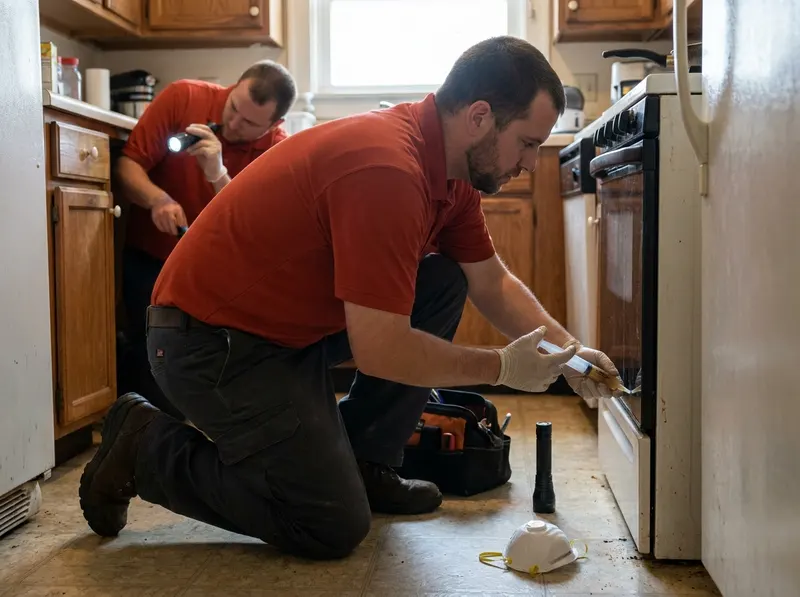
Targeted German cockroach remediation eliminates stubborn Blattella germanica infestations from kitchens, bathrooms, food storage pantries, and multi-family plumbing shafts. The intervention starts with high-efficiency particulate air (HEPA) vacuum extraction of heavy harborages located behind commercial ranges, refrigerator motor coils, and under sink cabinets to reduce live breeding adults immediately. Technicians subsequently place micro-dosages of high-palatability abamectin and indoxacarb gel baits inside cabinet hinges, unsealed countertop lips, and utility chase openings, combined with cold-aerosol insect growth regulator applications in hidden wall voids. The growth regulators disrupt chitin formation during nymph molting, leaving surviving roaches permanently sterile and breaking the reproductive cycle across successive egg cases (oothecae) without aerosol drift into cooking zones.
View details →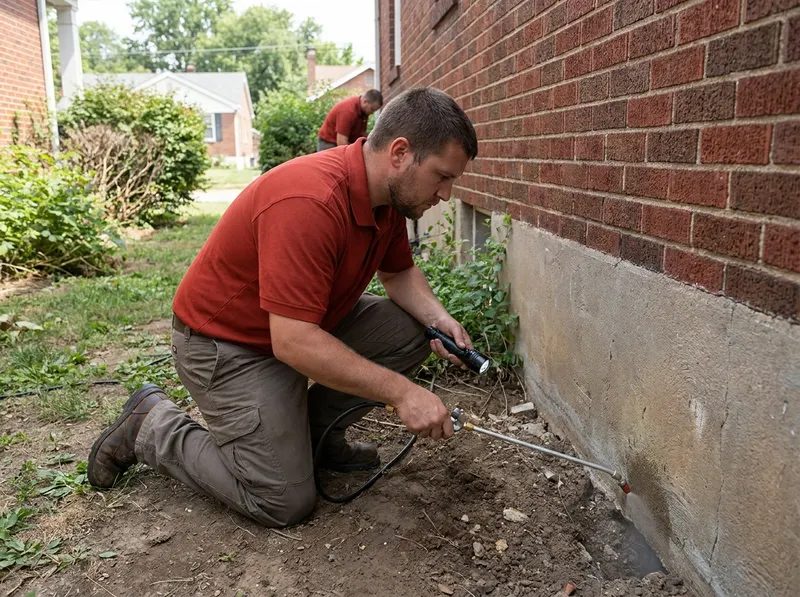
Our brown recluse management strategy addresses the cryptic habits of Loxosceles reclusa across dark, undisturbed zones such as attic insulation, crawlspaces, drop ceilings, and interior storage closets. Because spiders walk with their bodies elevated above treated flat surfaces, routine liquid floor sprays yield poor control; instead, technicians inject microencapsulated deltamethrin and amorphous silica dust deep into wall voids, attic soffit intersections, and unfinished floor joists where spiders actively hunt. Technicians establish exterior perimeter defensive bands using wettable powder insecticides along foundation walls and window lintels, supplemented by high-density non-toxic sticky monitoring grids positioned in closet corners, water heater enclosures, and basement margins to intercept migrating arachnids and track population declines.
View details →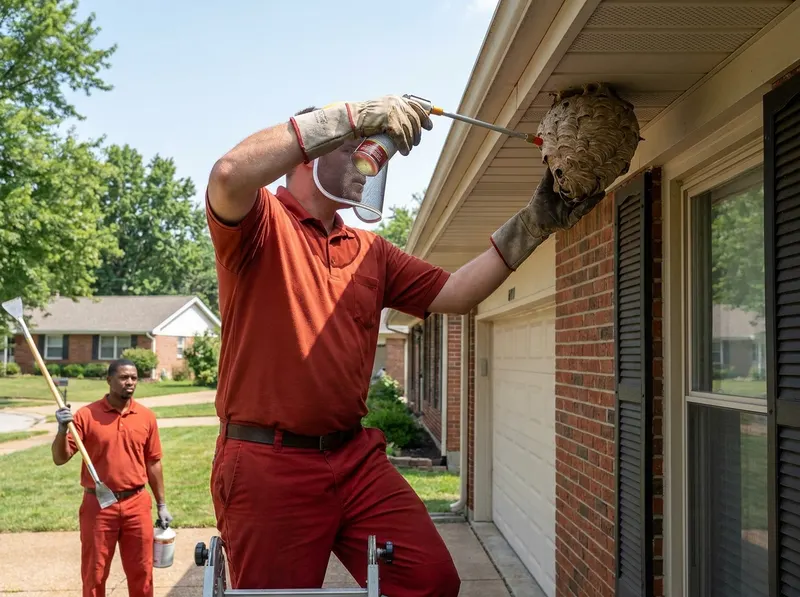
Our stinging insect removal service safely neutralizes and extracts aggressive colonies of European paper wasps, bald-faced hornets, and ground-nesting yellowjackets from residential eaves, attic overhangs, structural siding, and yard perimeters. Technicians don full protective bee suits and deploy calibrated rapid-knockdown freezing aerosols or high-velocity micro-particle dust directly into nest entrance portals, instantly incapacitating defensive guard wasps and halting attack pheromone releases. Following biological neutralization, technicians physically remove the entire paper nest or subterranean comb structure from the building, scrape down lingering attachment points, and treat the immediate substrate with residual pyrethroid sprays to deter returning foraging wasps from rebuilding in the same location.
View details →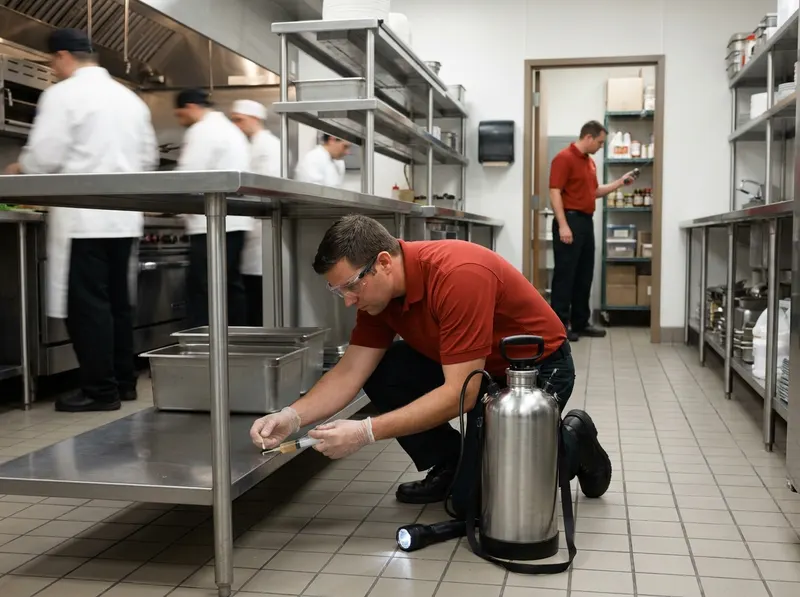
Our integrated pest management (IPM) programs for commercial food service, warehousing, and hospitality facilities focus on regulatory compliance, digital documentation, and non-chemical environmental modifications. Programs feature barcoded electronic monitoring traps, exterior tamper-resistant bait stations, wall-mounted insect light traps (ILTs), and enzymatic biological drain line treatments that digest the organic grease films where drain flies and phorid flies breed. Technicians provide detailed electronic service logs, sanitation audit scores, and structural exclusion recommendations after every visit, satisfying strict city health department codes, USDA guidelines, and third-party food safety audit standards without disrupting commercial food production shifts.
View details →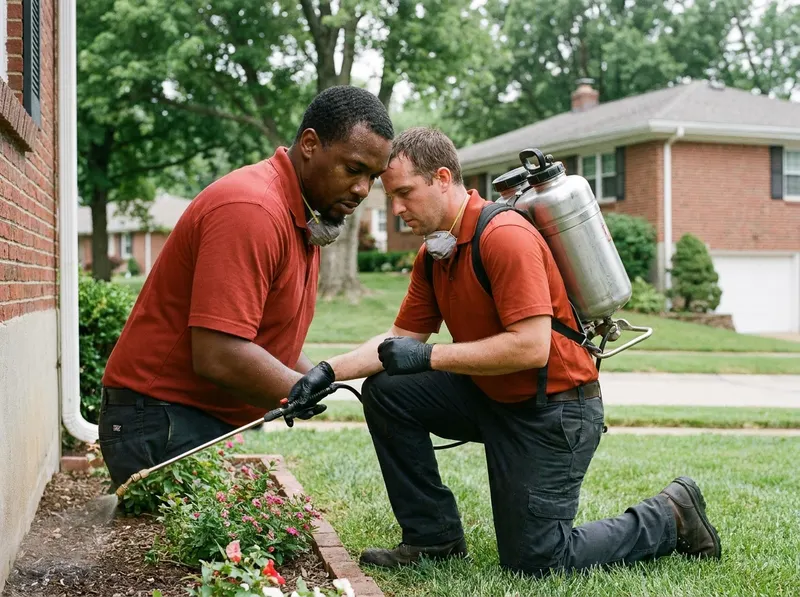
Our exterior barrier defense establishes a continuous protective boundary around property perimeters to stop foraging worker ants and breeding mosquitoes before they invade indoor living areas. Technicians utilize backpack mist blowers to treat the undersides of dense foliage, ornamental shrubs, groundcover beds, and shaded eave overhangs where adult mosquitoes rest during daylight hours, applying weatherized micro-suspension compounds that resist rainwater runoff. Simultaneously, technicians apply a 3-foot vertical and 10-foot horizontal liquid insecticide band around foundation masonry, door thresholds, and window lintels, eliminating odorous house ants, carpenter ants, and pavement ants from establishing interior foraging highways.
View details →Pest Control Service in Saint Louis is a specialized environmental remediation and structural protection process that eliminates insect, arachnid, and rodent infestations while sealing foundation voids against biological re-entry.
You get a firm, itemized quote for your pest control service before any work begins — no surprises, no pressure.
Careful prep, tidy work, and a full cleanup when we are done. We treat your home and belongings like our own.
The same trusted, background-checked team from the first call to the final check.
Selecting the correct remediation method depends directly on target pest biology, structural construction materials, and the physical location of the harborage. If you discover active mud tubes running along basement limestone foundation walls or hollowed timber framing, select subterranean termite liquid soil barrier trenching rather than topical surface sprays; surface sprays fail to penetrate deep soil paths, whereas non-repellent liquid termiticides transfer throughout the underground colony for total biological elimination. If you detect scratching sounds inside drywall or find dark grease rub marks along floorboards, choose multi-point physical rodent exclusion over repeated indoor poison baiting; interior rodent baiting kills individual mice or rats but leaves structural foundation voids open, allowing secondary rodent colonies to colonize the interior within weeks. The trade-off is that comprehensive mechanical exclusion requires rigorous structural sealing around exterior brick perimeters, roofline soffits, and utility penetrations, demanding a higher upfront diagnostic and labor cost than temporary chemical bait boxes. If you manage an active German cockroach infestation in multi-unit kitchen cabinetry, choose high-potency abamectin gel baiting combined with insect growth regulator micro-injections instead of broad-spectrum fogging; foggers scatter roaches deeper into neighboring wall cavities, while targeted gel baits trigger systemic secondary mortality throughout hidden nesting voids without contaminating food prep surfaces. If brown recluse spiders are discovered inside finished attics or drop ceilings, select microencapsulated pyrethroid dust injections paired with extensive sticky monitoring boards rather than routine baseboard liquid spraying; brown recluse spiders walk on elevated hairs that keep their bodies above liquid surface residues, making void dust dispersion the only method that coats their grooming pathways directly.
Every project gets a firm, written price after a free on-site visit. Ranges below for orientation.
Tell us about your pest control service job and we'll send a clear, written quote — usually the same day. Or just call and talk to a real Saint Louis pro.
Properties built along the Mississippi River basin and throughout historic brick streetscapes in Soulard, Lafayette Square, and Dutchtown experience intense biological pest pressures stemming directly from aging limestone foundations, century-old unlined brick sewer vaults, and dense urban tree canopies. The older rubble foundations common to homes near Tower Grove Park and Forest Park develop natural mortar degradation over decades, creating direct sub-grade entry voids where Norway rats, house mice, and subterranean termites bypass standard exterior barriers. During peak summer months, elevated humidity levels off the river corridor and major transit arteries like Interstate 44, Interstate 64, and Interstate 55 accelerate subterranean termite foraging along damp basement joists and trigger active brown recluse spider movements across uninsulated attics, drop ceilings, and crawlspaces throughout St. Louis City.
 Fast Home Pest Removal